Career Connected Pathways Stories of Impact
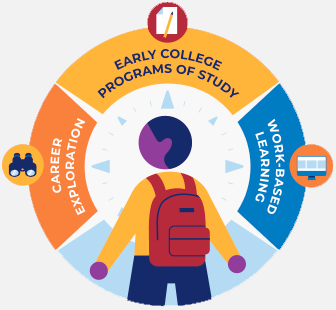
A five-year U.S. Department of Education , Education Innovation Research (EIR) grant, in partnership with the Center for the Future of Arizona, 12 high schools, and 7 community colleges, aims to understand what motivates or influences student behaviors to participate in dual enrollment and computer science courses – more broadly, what empowers students to take action and deepen engagement with career planning (ECAP) through the implementation of a Distributed Advising Approach. A Distributed Advising Approach is intended to facilitate deeper collaboration between K12 schools and community colleges by enabling systems change through three levers – 1) Student Voice, 2) Career Connected Toolkit, and 3) Co-Advising Framework.
Students Were Asked
- How do students experience career planning (I feel)?
- What do students need to deepen engagement with career planning (I want)?
- How can adults help students get what they need to feel prepared for life after high school (I can)?
of tenth graders aspire to continue their education right after high school; 48% actually do. Why?
Every student deserves to leave high school with hope, a plan, and a future they are excited about. It’s not just about what’s offered. It’s about what’s experienced – and who gets the invitation to step into it.”
— Izael, 11th grader
The Impact
We’ve captured what’s possible when students lead their own career planning in a Stories of Impact series titled Acts of Hope: How small changes led to big impacts. These stories show how, when students practice hopeful thinking, trusting relationships grow, personal agency strengthens, and systems evolve to support what students want most – to leave high school with “hope, a plan, and a future they’re excited about.”
Key Takeaways
- Let students lead!
- The purpose of HS is to surface every student’s hidden potential – NOT claim a career identity.
- Hope is contagious.
New Ideas. New Ways of Working Together.
Partnership Results – Dobson & Skyline HS with Mesa Community College
Driving growth in dual enrollment and computer science. The grant project successfully increased student awareness and participation in key college-preparatory programs by transforming the relationships between students and the adults that support them. An MCC Embedded Advisor at Dobson HS emphasized the power of a unified message: “One of the biggest benefits is having the same conversation with students hearing the same things from multiple adults instead of hearing the same thing three different ways. Now students can go back and forth asking questions. Hearing the same information in the same language from the dual enrollment Embedded Advisor, computer science teacher, and the Career Specialist”.
of students agree they have gained a deeper understanding of their career interests.
90%
of students agree they have a deeper understanding of the steps they need to take to pursue the career they want.
78%
of students plan to continue their education after high school, whether through a degree, industry certificate, apprenticeship, or military service.
Stories of Impact Case Study
Career Planning
Who is responsible for student success with career planning? Shifting mindsets and transforming relationships.
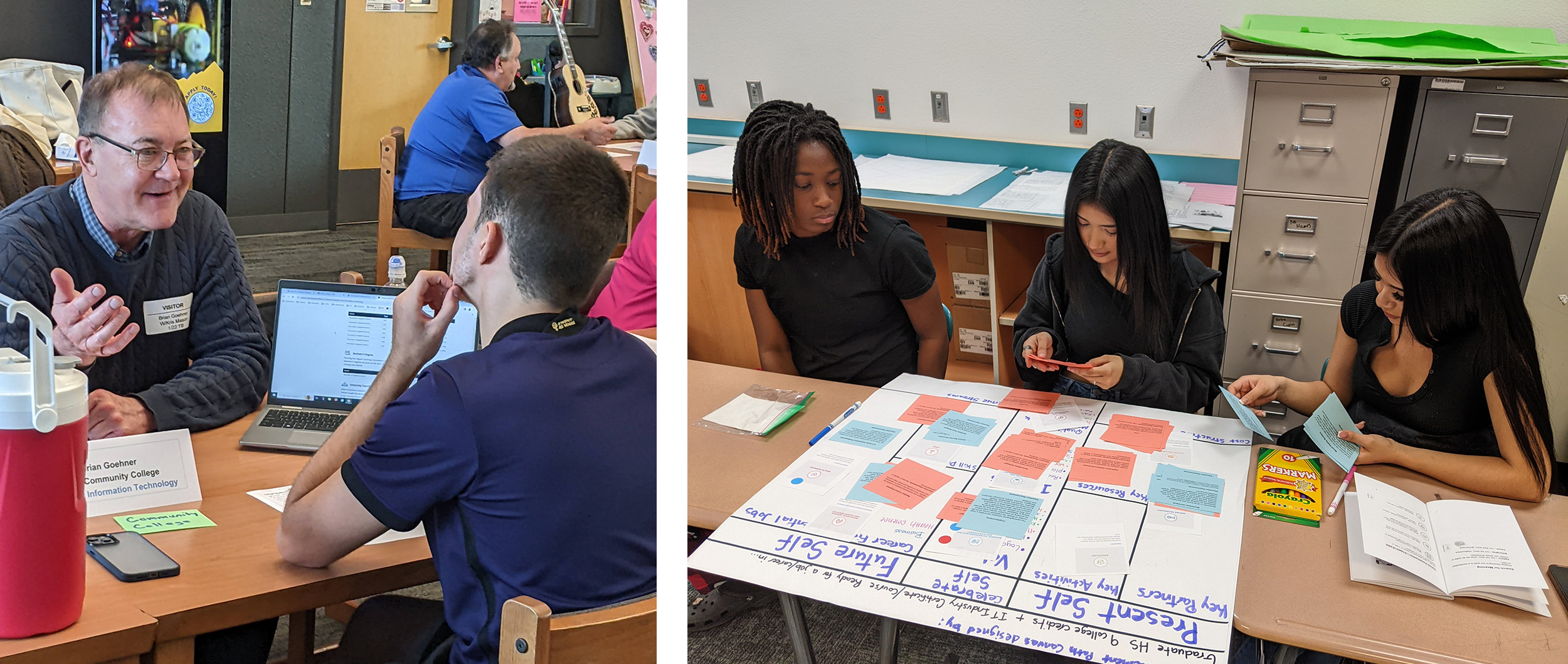
How do students experience career planning?
Prior to participation in the grant project, adults were working in silos. There was a lack of alignment across systems and roles, lack of awareness about how students engaged with career planning, and lack of understanding of who is responsible for student success. Students and adults at Mesa Public Schools – Skyline HS and Dobson HS – in partnership with Mesa Community College, observed a gap between student and adult experiences with career planning.
The grant project provided an opportunity to reimagine delivery of the Arizona Education Career Action Plan (AZECAP) as a product and a process of “looking ahead to discern possibilities” and of hope to deepen engagement with career planning.
What do students need to deepen engagement with career planning?
The project acted as a catalyst to move career exploration from a peripheral, check-the-box activity (ECAP as a product) to an integrated part of the school’s culture and curriculum (ECAP as a process). The Skyline Instructional Coach explained this shift: “What EIR did was really bring this work into the various classrooms over multiple years. Bringing career exploration into their curricular courses was really important and we did it quite a bit over the years.” An MCC Embedded Advisor at Skyline HS highlighted the cultural shift: “It’s small steps (big wins) but becoming a more campus-wide conversation rather than simply something that certain kids get at certain times because they talk to certain people.”
An educator from Dobson HS spoke about the value of adding dual enrollment: “As part of the EIR grant project we added dual enrollment courses; it’s really exciting for the kids to be able to get college credits and have those discussions. Just seeing the kids’ connection with college and their current class is pretty good.”
Students who participated in Career and Technical Education (CTE) and dual enrollment courses saw them as critical to their success and preparation for the future. A student powerfully stated: “I’m proud of completing high school with some college credits, and two CTE programs that let me experience different education & possible job outcomes. This also allows me to look for a decent job right after high school to save up & pay for higher education.”
How can adults help students get what they need to feel prepared for life after high school?
The EIR Career Connected Pathways grant project had several key impacts on Skyline High School, Dobson High School, and Mesa Community College (MCC), primarily by fostering collaboration, enhancing student engagement, and driving growth in dual enrollment and computer science courses.
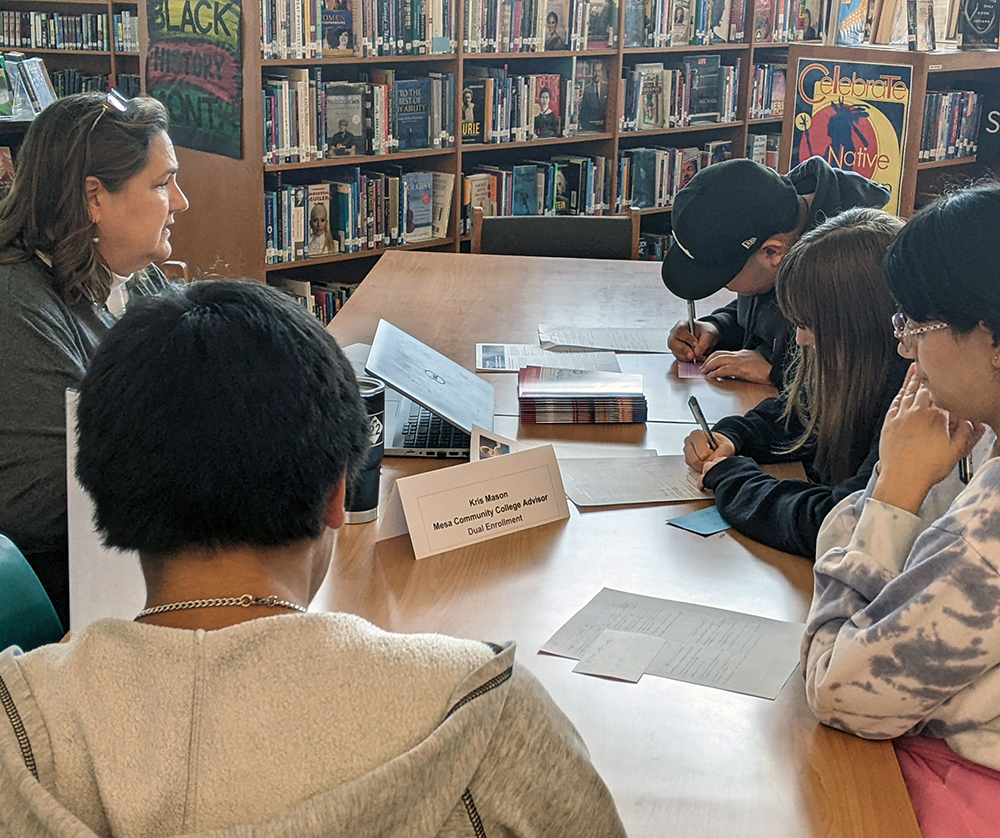
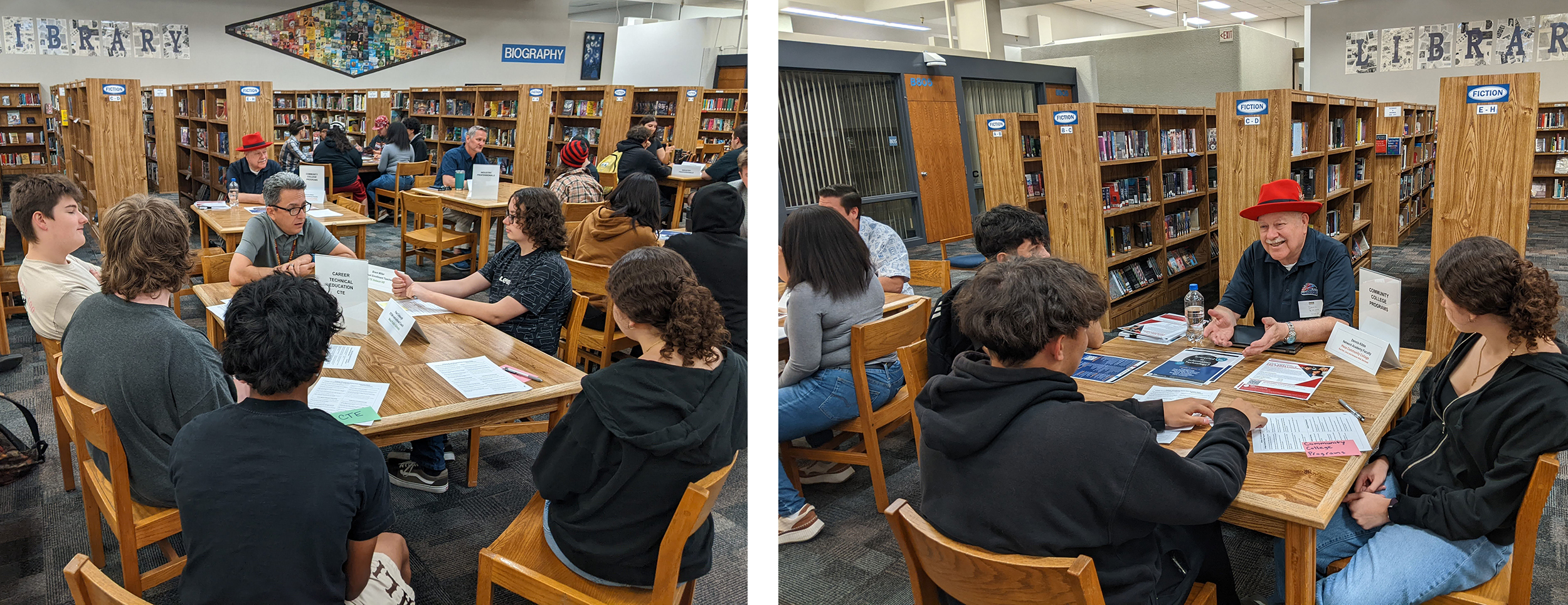
A key success was creating new, impactful experiences like the “Industry Speed Date” (ISD) that connected students directly with professionals and college faculty, sparking genuine interest and engagement.
 |
|
Key Learnings
|
“This year was the first time since I’ve been here that we brought together counselors, college and career, administration and the new CTE Coach and said okay, what is everybody doing in this space... cultivating a great working relationship with the college and career specialist and the HS is really beneficial.” – Mesa CC Embedded Advisor
An educator described the ISD event: “It was one of the most successful events where we saw students engaged the most; at first they were timid but once they started talking it just opened up doors and it opened up questions and it opened up engagement in a completely different way... It was neat to see the kids start to relax and lean into it and get something out of it.” The English Teacher noted “It really sparked their thought into ‘oh, maybe this is a career for me.’”
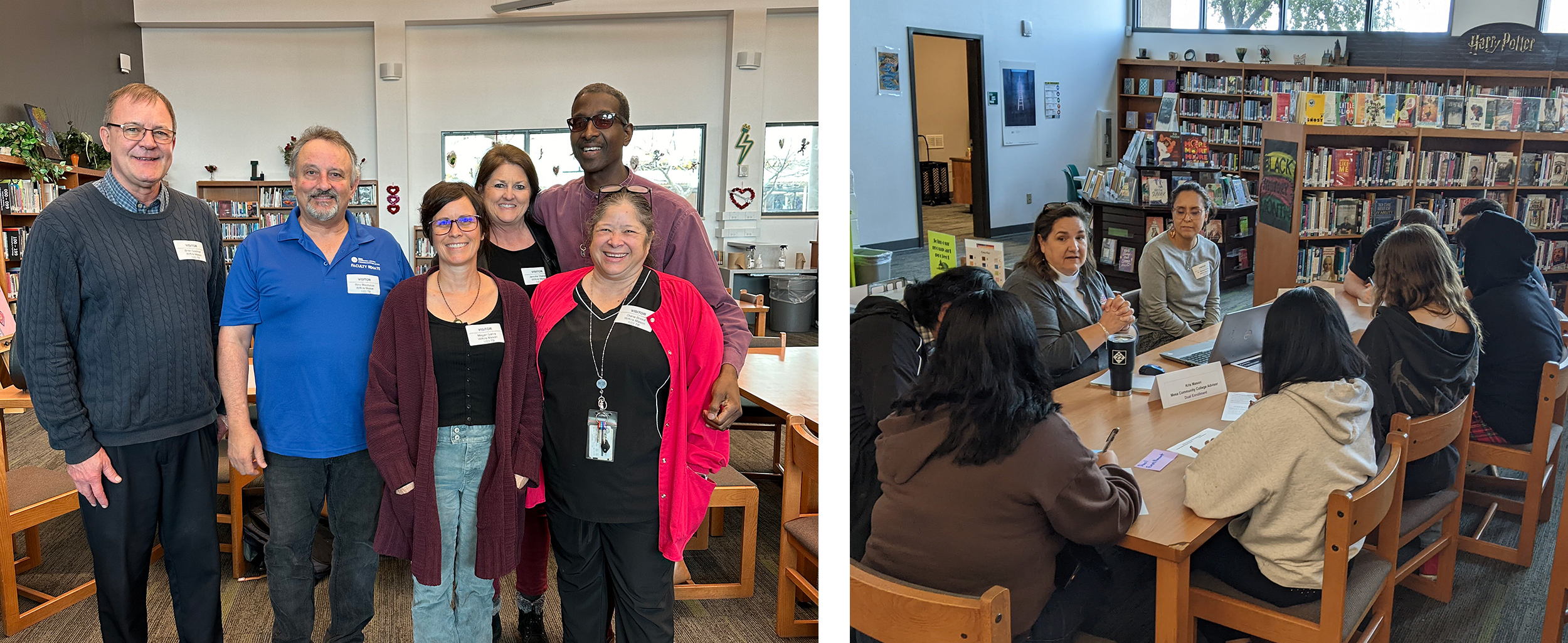
A stronger, brighter future.
The project led to a dramatic 2,431% increase in Computer Science dual enrollment at Dobson HS. The teacher reported that student enrollment had gone up “considerably” since the grant began, leading to a full schedule of six classes. The program’s popularity spread by word-of-mouth among students, which proved more effective than any flyer.
The grant project helped make dual enrollment a more campus-wide conversation at Skyline, with MCC advisors, teachers, and other staff working to connect the dots for students about the value of earning college credit in high school. At Dobson, new dual enrollment courses in subjects like Python and Computer Maintenance were added, exciting students about the possibility of earning college credits.
Students and adults have surfaced a path of shared responsibility for student success that has sparked, grown, and spread deeper engagement with career planning by operationalizing a distributed advising approach that makes sure more students have a better understanding of what’s possible after high school.
Students are actively seeking out things that interest them – of the 261 12th grade respondents, an overwhelming majority of 85% agree they have gained a deeper understanding of their career interests. 90% agree they have a deeper understanding of the steps they need to take to pursue the career they want. 78% indicated they plan to continue their education right after high school pursuing an associate or bachelor’s degree, obtaining an industry certificate, participating in an apprenticeship or joining the armed services.
of students agree they have gained a deeper understanding of their career interests.
78%
of students plan to continue their education after high school, whether through a degree, industry certificate, apprenticeship, or military service.
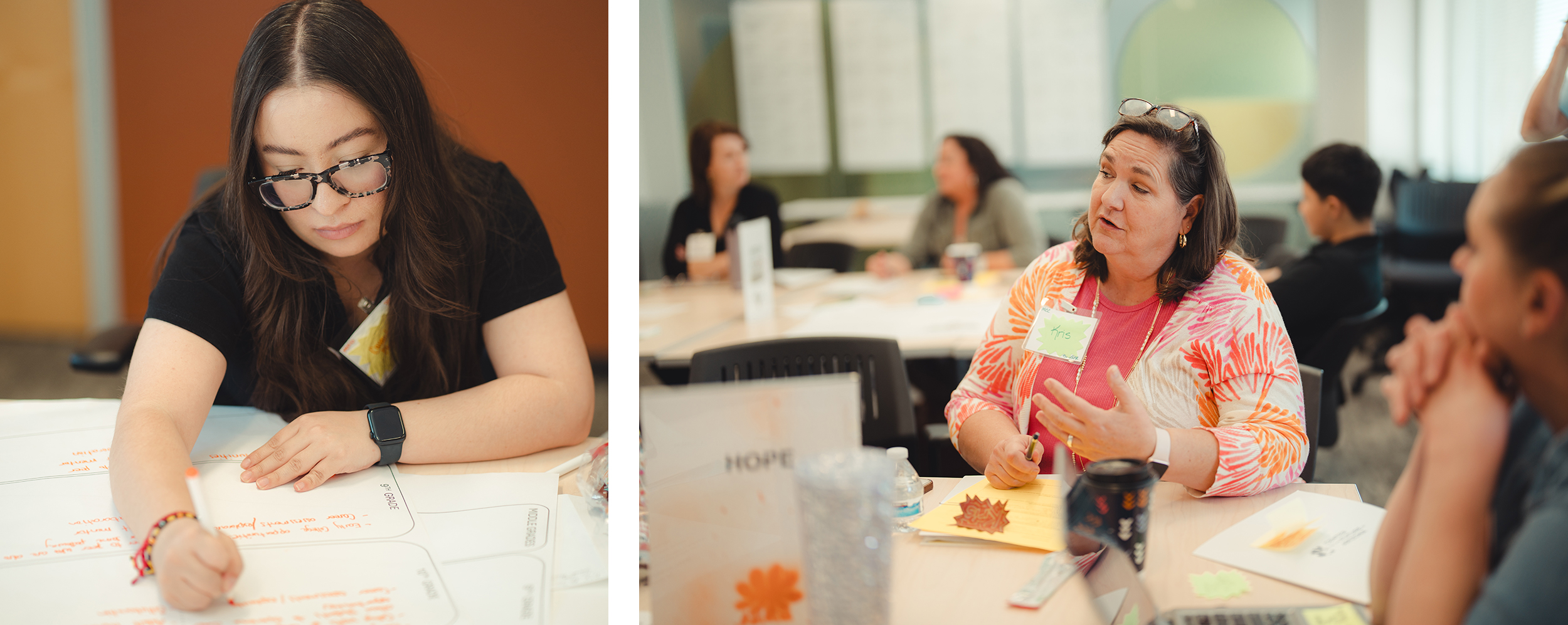
Finding people to help them when they need it – 89% agree they have one adult in their life who makes them excited about their future. They are building a community around them – 93% agree they have a great future ahead of them and 92% know they will find a good job in the future.
Students are taking control of their future, with one stating, “The greatest influence to me in career discovery was reaching out and talking with people in diverse work industries. I spoke with doctors, lawyers, accountants, and the police to learn more about their work and if it would be something that I would find fulfillment in.” Another emphasized the role of teachers and parents, “My teachers and parents have been a really great support to me during my high school career. My teachers have helped provide me with links or access to people and opportunities that have really helped me get farther in my education.”
The students are highlighting that “transforming a system is really about transforming the relationships between the people who make up the system.” Fostering a culture of shared responsibility for student success across systems has cultivated new ways of working together and transformed into students taking action better prepared for life after high school.
of students agree they have one adult in their life who makes them excited about their future.
93%
of students agree they have a great future ahead of them.
Spark. Grow. Spread. Hope.