Career Connected Pathways Stories of Impact
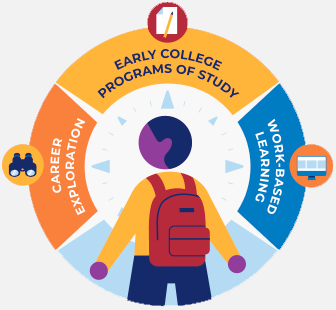
A five-year U.S. Department of Education , Education Innovation Research (EIR) grant, in partnership with the Center for the Future of Arizona, 12 high schools, and 7 community colleges, aims to understand what motivates or influences student behaviors to participate in dual enrollment and computer science courses – more broadly, what empowers students to take action and deepen engagement with career planning (ECAP) through the implementation of a Distributed Advising Approach. A Distributed Advising Approach is intended to facilitate deeper collaboration between K12 schools and community colleges by enabling systems change through three levers – 1) Student Voice, 2) Career Connected Toolkit, and 3) Co-Advising Framework.
Students Were Asked
- How do students experience career planning (I feel)?
- What do students need to deepen engagement with career planning (I want)?
- How can adults help students get what they need to feel prepared for life after high school (I can)?
of tenth graders aspire to continue their education right after high school; 48% actually do. Why?
Every student deserves to leave high school with hope, a plan, and a future they are excited about. It’s not just about what’s offered. It’s about what’s experienced – and who gets the invitation to step into it.”
— Izael, 11th grader
The Impact
We’ve captured what’s possible when students lead their own career planning in a Stories of Impact series titled Acts of Hope: How small changes led to big impacts. These stories show how, when students practice hopeful thinking, trusting relationships grow, personal agency strengthens, and systems evolve to support what students want most – to leave high school with “hope, a plan, and a future they’re excited about.”
Key Takeaways
- Let students lead!
- The purpose of HS is to surface every student’s hidden potential – NOT claim a career identity.
- Hope is contagious.
New Ideas. New Ways of Working Together.
Partnership Results — Apache Junction High School and Central Arizona College
We’re expanding college and career readiness by embedding CAC college-credit courses into the high school bell schedule; students will participate online during their school day. We’re also creating earlier exposure for younger students by involving families and industry partners, and introducing programs like Alumni Lunch n Learns, Teacher and Parent Speed Dates, a Club Mentor Program, and a 12th-grade-hosted college and career event. Additionally, we’re hosting an Opportunity Showcase featuring college recruiters, trade schools, and industry internship presentations to broaden students’ pathways for the future.
of students agree they have gained a deeper understanding of their career interests.
84%
of students agree they have a deeper understanding of the steps they need to take to pursue the career they want.
87%
of students plan to continue their education after high school, whether through a degree, industry certificate, apprenticeship, or military service.
Stories of Impact Case Study
Student Voice.
Student Choice.
Students discerning possibilities for their future is an act of hope

How do students experience career planning?
The grant project enabled a variety of impactful immersive learning and storytelling activities focused on career planning for mixed grade-level students enrolled in two sections of the Intro to Computer Science CTE course. These activities provided multiple opportunities for students to practice hopeful thinking – Hope = Goal + Pathway Thinking + Agency Thinking – and included Pitch the Path a student-driven design challenge, a college financial literacy Industry Speed Date, and Technology at Disney Parks Workshop.
Across these immersive experiences, students describe a significant positive shift in their preparedness and outlook on their future. Students felt wonder and excitement, demonstrated critical skills sought after in workforce – active listening, courage and risk taking, understanding their strengths, storytelling, public speaking – and practiced a variety of actions that advance their career planning story that include explore career opportunities matched to your interests, enroll in CTE and Dual Enrollment courses, develop or revise their college and career plan, map out course transferability.
“I think I learned more self-leadership skills and digital skills. I learned about how we can use imagination, innovation, and creativity in everything.” Amphi HS Student
What do students need to deepen engagement with career planning?
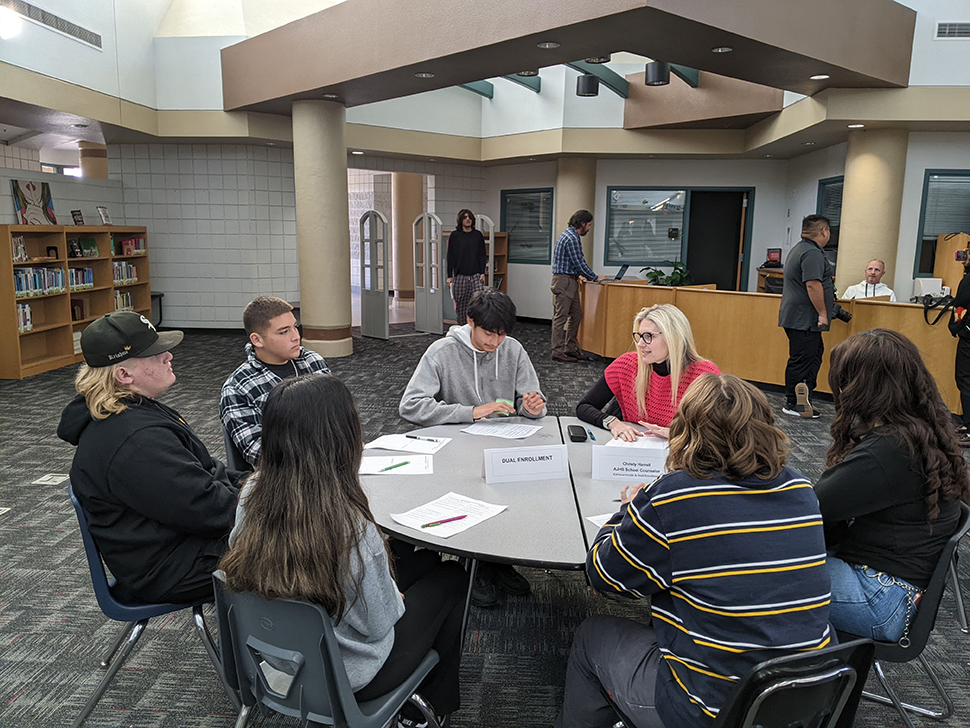
Responding to what students want, the grant partners developed a Student-Centered Design Thinking Challenge – delivered to 11th graders in one section of an Earth Science course. Students worked in teams to solve the challenge: how they might design a career advancement path that includes 9 college credits and an industry credential that aligns to student values, skills and interests and prepares them to gain millions in lifetime earnings for a job or career in [students select the job or career field].
The challenge consisted of five phases (in the box to the right) in which students developed and demonstrated critical work skills, career planning actions and reflected on their role in what is working that supports career planning. The HS Counselor describes the experience; “At first, during the Industry Speed Date, students were “deers in headlights” at the beginning but then they were really into it. After the College 101 hosted by CAC, that really helped students see the career opportunities, then we started to see a shift in student behaviors – it was really cool to watch – seeing students considering options like college for the first time. Seeing students start to believe in a different future for themselves was amazing. They had more opportunities than they thought.”
 |
|
Design Thinking
Challenge Phases
|
How can adults help students get what they need to feel prepared for life after high school?
TThe school’s leadership team restructured how students were experiencing career planning by being more mindful of the language and visuals used to present opportunities to students. Amphi HS and its staff became more proactive in creating and providing resources and experiences that sparked collaborations across the system fostering systemic changes.
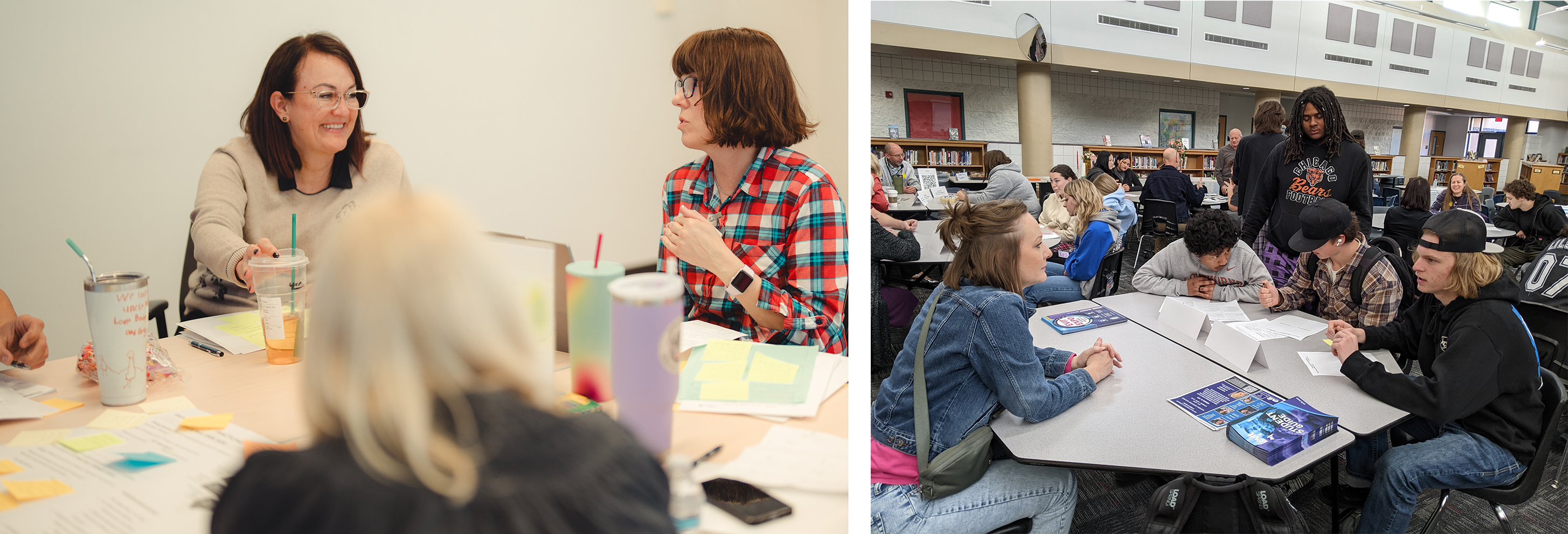
“The EIR project seems to have created targeted and meaningful collaboration with high school partners to address specific student needs. I have had the pleasure of meeting with the students through the Speed Dates and seeing how excited they are to ask us their questions and seeing their interest is a huge win!” – High School CTE Instructional Coach
The adults involved reported that the grant “forced us in a good way to really get to know our students well,” leading to stronger relationships built on trust and empowerment. A CTE coach expressed pride in seeing a teacher’s confidence grow as he became a recognized resource for students, parents, and administrators.
A stronger, brighter future.
“This has been an incredible experience for our school, staff, and students. We’ve added AP courses, college courses and more CTE programs – students are hungry for this type of challenge! We have made a lot of growth, and we look forward to continuing in this direction. The interest and excitement students have shown from these opportunities, it’s been really cool to see students considering college options for the first time and that we’re now able to meet the need of what matters most to students – more opportunities with college and career,” said an Apache Junction High School principal.
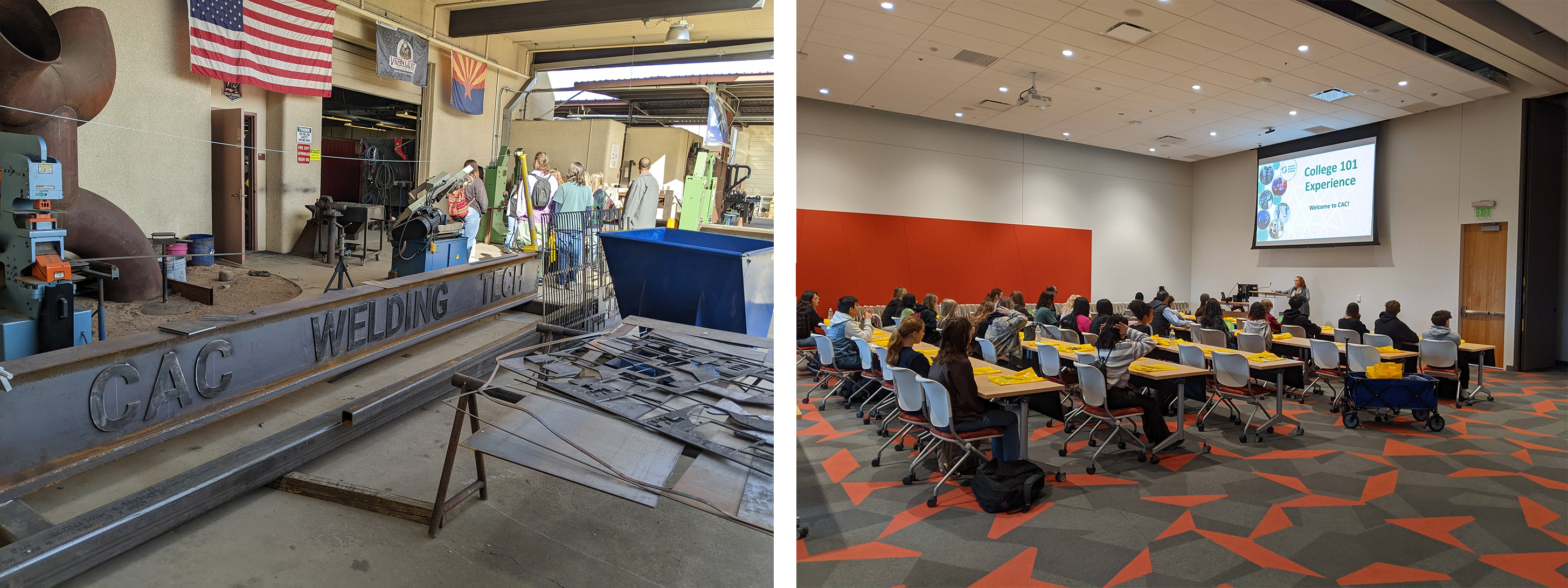
Students and adults have surfaced a path of shared responsibility for student success that has sparked, grown, and spread deeper engagement with career planning by operationalizing a distributed advising approach that makes sure more students have a better understanding of what’s possible after high school.
Students are actively seeking out things that interest them – Of the 101 12th grade respondents, an overwhelming majority of 86% agree they have gained a deeper understanding of their career interests – 84% agree they have a deeper understanding of the steps they need to take to pursue the career they want. 87% indicated they plan to continue their education right after high school pursuing an associate’s or bachelor’s degree, obtaining an industry certificate, participating in an apprenticeship or joining the armed services.
of students agree they have gained a deeper understanding of their career interests.
87%
of students plan to continue their education after high school, whether through a degree, industry certificate, apprenticeship, or military service.
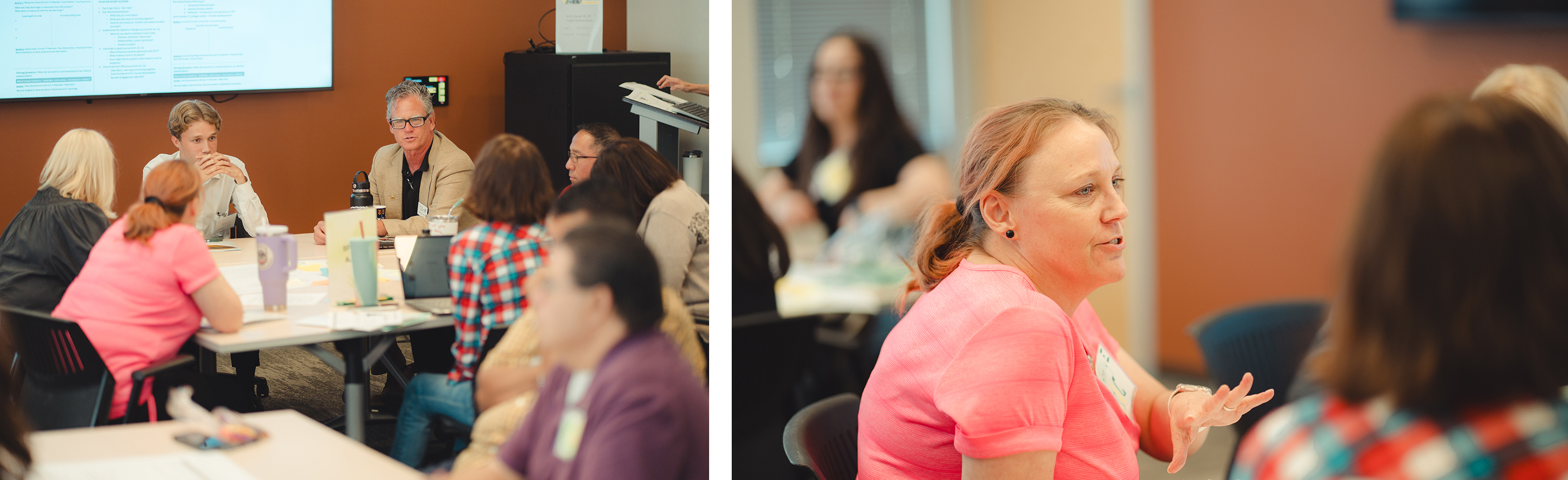
Finding people to help them when they need it – 96% agree they have one adult in their life who makes them excited about their future. They are building a community around them – 94% agree they have a great future ahead of them and know they will find a good job in the future.
Students are proud of having clear career goals (e.g., aerospace engineer, welding, nursing, phlebotomy), earning certifications (e.g., 3D modeling, NCCER carpentry Level 2, phlebotomy), completing internships (e.g., Able Aerospace), and successfully participating in dual enrollment courses. Students are taking control of their future, with one stating, “I found out what I want to do for a good portion of my life.” Others highlighted being proud of “getting myself through it all and not giving up.”
The shift in student behaviors is cementing a shift in adult perceptions about what matters to students and accelerating shared responsibility across systems for student success. AJHS is committed to continuing this growth. For the 2025-26 school year, they plan to expand college and career course offerings and student experiences further. Counselors and teachers continue to play a vital role, ensuring every student knows what is available and having deeper conversations about students’ “big dream.”
of students agree they have one adult in their life who makes them excited about their future.
94%
of students agree they have a great future ahead of them.
Spark. Grow. Spread. Hope.