Career Connected Pathways Stories of Impact
A five-year U.S. Department of Education , Education Innovation Research (EIR) grant, in partnership with the Center for the Future of Arizona, 12 high schools, and 7 community colleges, aims to understand what motivates or influences student behaviors to participate in dual enrollment and computer science courses – more broadly, what empowers students to take action and deepen engagement with career planning (ECAP) through the implementation of a Distributed Advising Approach. A Distributed Advising Approach is intended to facilitate deeper collaboration between K12 schools and community colleges by enabling systems change through three levers – 1) Student Voice, 2) Career Connected Toolkit, and 3) Co-Advising Framework.
Students Were Asked
- How do students experience career planning (I feel)?
- What do students need to deepen engagement with career planning (I want)?
- How can adults help students get what they need to feel prepared for life after high school (I can)?
of tenth graders aspire to continue their education right after high school; 48% actually do. Why?
Every student deserves to leave high school with hope, a plan, and a future they are excited about. It’s not just about what’s offered. It’s about what’s experienced – and who gets the invitation to step into it.”
— Izael, 11th grader
The Impact
We’ve captured what’s possible when students lead their own career planning in a Stories of Impact series titled Acts of Hope: How small changes led to big impacts. These stories show how, when students practice hopeful thinking, trusting relationships grow, personal agency strengthens, and systems evolve to support what students want most – to leave high school with “hope, a plan, and a future they’re excited about.”
Key Takeaways
- Let students lead!
- The purpose of HS is to surface every student’s hidden potential – NOT claim a career identity.
- Hope is contagious.
New Ideas. New Ways of Working Together.
Partnership Results – Sunnyside High School and Pima Community College
Sunnyside High School actively makes collaboration a central part of its Career Connected Pathways strategy through a deeply integrated effort they reference as the 7 Times 7 Ways principle involving students, educators, industry, higher education, and community organizations. School district leaders believe in showing students opportunities as many times as possible so they can truly understand their options. This is a strong example of a Distributed Advising Approach.
Sunnyside High School (HS) and Pima Community College (CC) implementation of A Distributed Advising Approach demonstrates shared responsibility for student success and ensures students are supported from multiple angles as they explore and plan for their futures.
of students agree they have gained a deeper understanding of their career interests.
84%
of students agree they have a deeper understanding of the steps they need to take to pursue the career they want.
79%
of students plan to continue their education after high school, whether through a degree, industry certificate, apprenticeship, or military service.
Stories of Impact Case Study
7 Times 7 Different
Ways Principle
Deepening student engagement with career planning.
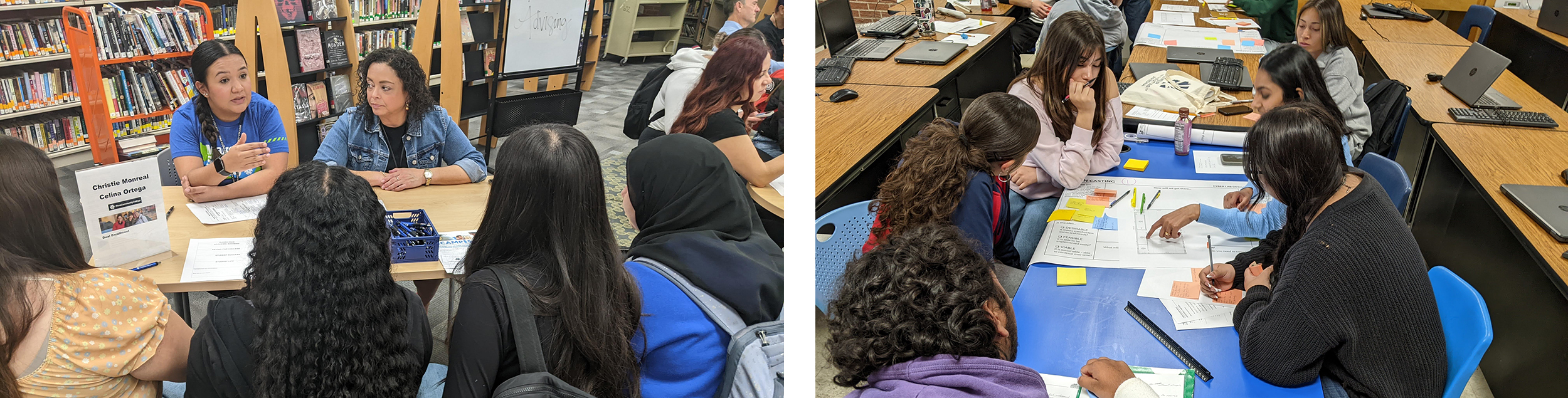
How do students experience career planning?
Sunnyside HS and Pima CC recognize that student engagement is deeply influenced by relationships. The Distributed Advising Approach prioritizes student voice and ensuring students feel heard and supported. It centers student needs so students have more agency in their career planning and fosters adult-student relationships by providing more opportunities for collaboration as students work toward their goals.
What do students need to deepen engagement with career planning?
Students explicitly stated a need for “early exposure to explore my interests and careers.” Sunnyside responded by creating a system of repeated, meaningful exposure to the world of work through experiential learning.
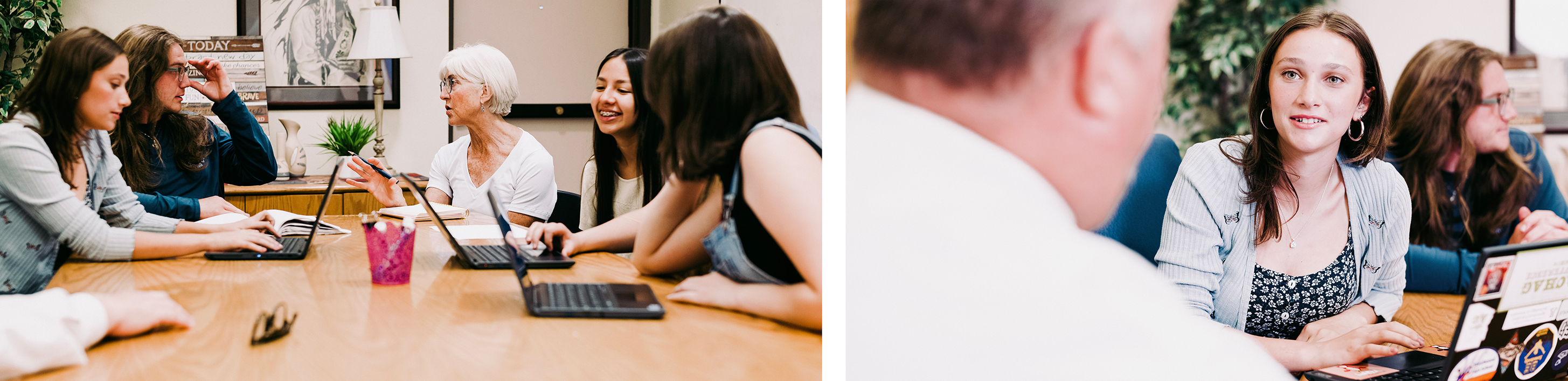
An event called the “Industry Speed Date” proved highly effective. It brought students together with career professionals, college advisors, and community programs in small groups. This collaborative format helps shy students feel more comfortable asking questions and allows for more meaningful, personal interactions and introduced them to support systems, like scholarships, that they were previously unaware of. A CTE Director described the adults’ role as needing to “light the spark and then let them go from there.”
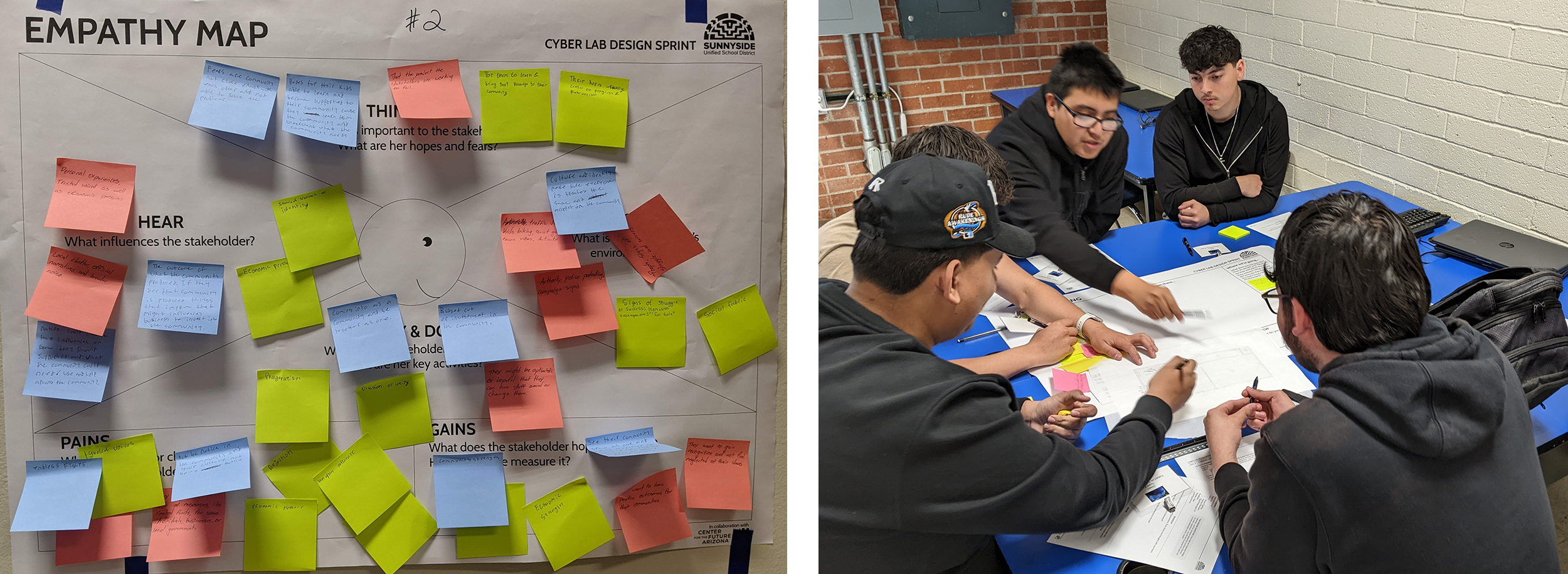
One example of “lighting the spark” that fostered student ownership and action was a student design challenge in a CTE Computer Science course. Students explored the question: How might we implement design elements – such as equipment, furniture, fixtures, art, color – into the new Sunnyside HS Cyber Lab to meet stakeholder wants and needs?
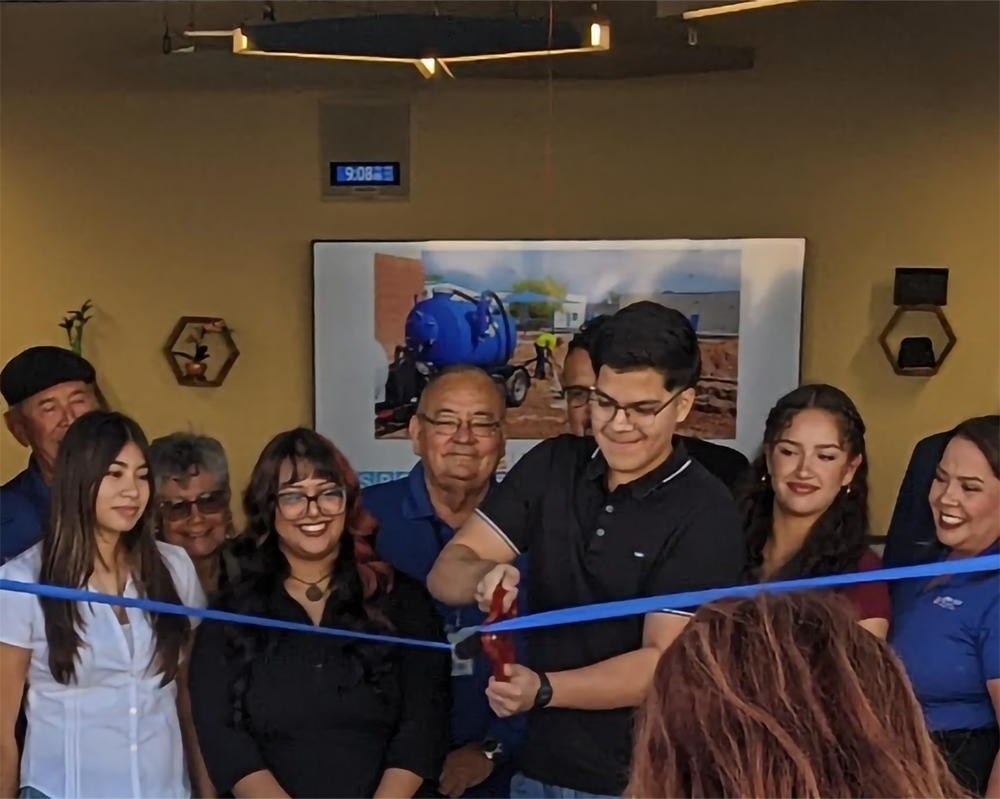
Students worked in teams to gather information about how the space would be used by stakeholders, interviewed experts, and completed a virtual tour of a completed HS CyberLab before designing their prototypes. The student designs were highlighted as critical to the success of the project during the ribbon cutting ceremony.
This focus on hands-on experiences helped students go “beyond the resume” by showcasing tangible skills. The school has prioritized expanding Industry Speed Dates, CTE courses, job shadows, internships, and industry certifications. 12th graders reported taking pride in these experiences, receiving certifications and developing skills in areas like cybersecurity.
Sunnyside HS and Pima CC are committed to this approach as they foster continuous improvement cycles addressing what matters most to students through a tri-partnership with the University of Arizona.
 |
|
7 Times, 7 Different Ways
|
“We are really excited about the coordination among these different initiatives that are going to be a part of this tri-partnership that we have.” – Sunnyside CTE Director
How can adults help students get what they need to feel prepared for life after high school?
Sunnyside HS has built a robust network of internal and external educational partners to create seamless pathways for students from high school to post-secondary opportunities. Sunnyside, Pima CC, and the University of Arizona (UofA) have formed a “tri-partnership” to create initiatives together. This collaboration is crucial for expanding dual enrollment opportunities, which students see as a way to “get a foot in the door to their future quicker.” The tri-partnership focuses on a more intentional method to transition students from high school to post-secondary education, so they are not “lost” in the process.
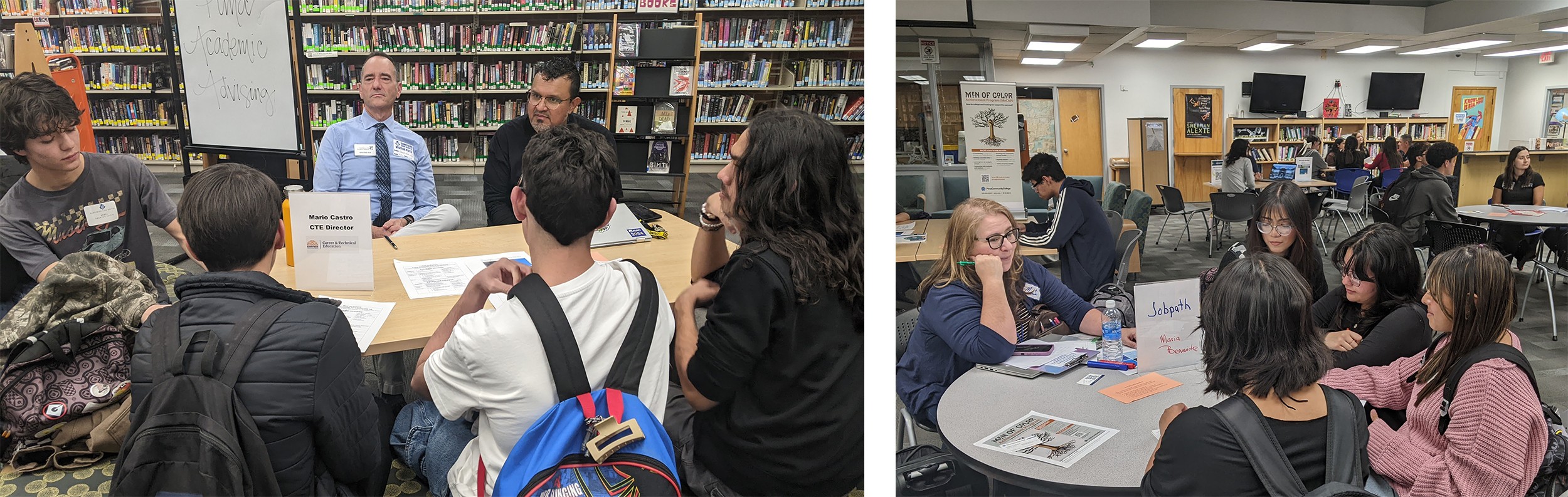
A key success was creating new and impactful experiences like the “Industry Speed Date” (ISD) that connected students directly with professionals and college faculty, sparking genuine interest and engagement.
An educator described the ISD event: “It was one of the most successful events where we saw students engaged the most; at first they were timid but once they started talking, it just opened up doors and it opened up questions and it opened up engagement in a completely different way... It was neat to see the kids start to relax and lean into it and get something out of it.” The teacher noted “It really sparked their thought into ‘oh, maybe this is a career for me.’”
This is a strong example of what’s possible when students and adults share responsibility for student success that includes embedded college support, aligning curriculum and goals across systems, engaging families, cultivating direct industry connections, aligning workforce demands and broadening college, community, and industry networks.
The Rule of Seven principle includes two core components:
7 times – repetition of communication builds familiarity and trusting relationships.
7 different ways – diversifying the message personalizes the invitation to participate.
A stronger, brighter future.
The Sunnsyide HS tri-partnership has identified five funding priorities as they advance what matters most to students with career planning:
1) Curriculum that embeds 8-12 experiential learning, career exploration, and enrichment.
2) Expansion of dual enrollment course offerings such as work-study pathways for U of A and Pima CC that include AGEC (Arizona General Education Curriculum) courses increasing college credit attainment.
3) Strengthening AVID (Advancement Via Individual Determination) programs for college and career readiness, offering students more opportunities to experience college and career environments.
4) Family outreach activities – bringing families together so they are more aware of postsecondary opportunities.
5) Facilitate post-secondary transition – making sure we transition students from high school to postsecondary in a more intentional way so we don’t lose them.
These five priorities service the goal that every student leaves high school with “hope, a plan, and a future they are excited about.”
Students and adults have surfaced a path of shared responsibility for student success that has sparked, grown, and spread deeper engagement with career planning by operationalizing a Distributed Advising Approach that makes sure more students have a better understanding of what’s possible after high school.
of students agree they have gained a deeper understanding of their career interests.
79%
of students plan to continue their education after high school, whether through a degree, industry certificate, apprenticeship, or military service.
Students are actively seeking out things that interest them – Of the 19 12th grade respondents, 100% agree they have gained a deeper understanding of their career interest. 84% agree they have a deeper understanding of the steps they need to take to pursue the career they want. 79% indicated they plan to continue their education right after high school pursuing an associate or bachelor’s degree, obtaining an industry certificate, participating in an apprenticeship or joining the armed services.
Finding people to help them when they need it – 89% agree they have one adult in their life who makes them excited about their future. They are building a community around them – 89% agree they have a great future ahead of them and 95% know they will find a good job in the future.
of students agree they have one adult in their life who makes them excited about their future.
89%
of students agree they have a great future ahead of them.
Spark. Grow. Spread. Hope.