Center for the Future of Arizona and ASU Mark 10 Years of School Participatory Budgeting and Look to the Next Decade
Experiential civics initiative helps students “learn democracy by doing” while building the skills and leadership Arizona needs for the futureTen years after helping expand School Participatory Budgeting (SPB) across Arizona, Center for the Future of Arizona (CFA) and Arizona State University’s Participatory Governance Initiative (PGI) are marking a decade of impact—and setting an ambitious vision for what comes next: making meaningful, hands-on civic learning part of the experience of every Arizona student.
SPB gives students real responsibility for improving their school communities. Students identify needs, develop proposals, work within real budget constraints, campaign for their ideas, and vote on which projects will receive funding.
In the process, they learn democracy by doing.
“Some of the most important lessons of democracy can only truly be learned through experience,” said Dr. Sybil Francis, Chair, President & CEO of Center for the Future of Arizona. “When young people are trusted with real responsibility, they learn that their voices matter, that participation can produce change, and that they have a role to play in making their communities better. Those are lessons that can stay with them for a lifetime—and help prepare the leaders Arizona will need for generations to come.”
School Participatory Budgeting was first piloted in the United States at Bioscience High School in Phoenix in 2013. CFA, ASU PGI, Phoenix Union High School District, and the Participatory Budgeting Project later helped expand the approach at the district level, establishing a school-based model that has since grown across Arizona since 2016.
Today, SPB has reached more than 100 school communities across 20+ districts in Arizona. More than $1.4 million in public dollars has been invested in hundreds of student-developed school improvement projects, and more than 9,400 students have registered to vote through SPB Vote Day partnerships.
Building the Civic Health Arizonans Want
The significance of SPB extends far beyond the individual projects students ultimately select.
CFA's research has consistently found that Arizonans want young people prepared to participate meaningfully in civic life. More than three-quarters of Arizonans support making K-12 civic education a priority, and 75% want to work together across differences to solve problems.
Those aspirations are part of The Arizona We Want, CFA's data-driven shared vision for a stronger, brighter future shaped by the priorities that matter most to Arizonans.
SPB puts those aspirations into practice.
Through the process, students learn to listen to different perspectives, collaborate, solve problems, weigh competing priorities, make decisions, and take responsibility for their communities. They also experience something fundamental to civic participation: what it feels like to have a voice and see that participation matter.
“After a decade of exploring the effects of School Participatory Budgeting, we have seen how powerful it is when students have the opportunity to practice democracy rather than simply learn about it,” said Daniel Schugurensky, founding director of Participatory Governance Initiative at Arizona State University.
“The research has consistently shown that students who participate in School Participatory Budgeting show gains in civic knowledge, collaboration and decision-making skills, and confidence in their ability to make a difference," added co-researcher and Principled Innovation Fellow, Tara Bartlett. "Because students are making real decisions that shape their school communities, throughout the School Participatory Budgeting process, they are developing the agency and skills needed for meaningful civic participation throughout their lives.”
The impact can extend throughout the school community. Giving students meaningful responsibility can change how young people see themselves and what they believe they can contribute. It can also change how educators and school leaders see their students—as partners with ideas, valuable perspectives, and an important role in strengthening their schools.
That reciprocal experience can build trust, communication, belonging, and stronger relationships between young people and adults.
Developing Arizona's Next Generation of Leaders
For CFA and ASU PGI, the 10-year milestone is not simply an opportunity to look back. It is an opportunity to ask what a decade of learning and impact makes possible next.
CFA and ASU PGI recently brought together students, educators, school and district leaders, community partners, and supporters to mark the anniversary, share lessons from the work, and consider how Arizona can build on what SPB has demonstrated.
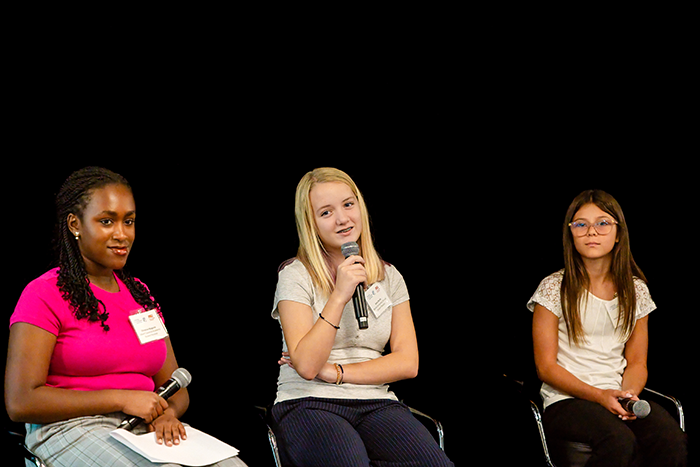
"I've always wanted others to see me as a helpful person. SPB has taught me how to be that kind of person, and I can't wait for those opportunities ahead in our communities,” said Ellie, a 6th Grade Student and SPB Leader. "This has taught me about my civic duties and how I could respect and believe in others."
The vision for the next decade is to continue expanding and adapting the model so that meaningful opportunities to practice civic participation become part of the educational experience of every young person across Arizona.
“We know this works. We know it can grow and adapt across very different school communities,” Mike Penca, Superintendent of the Flagstaff Unified School District, added. “Now we have an opportunity to keep building and growing so more young people can experience for themselves what it means to have a voice, take responsibility, work with others, and make a difference in their community.”
That work is about more than preparing students for civic participation someday.
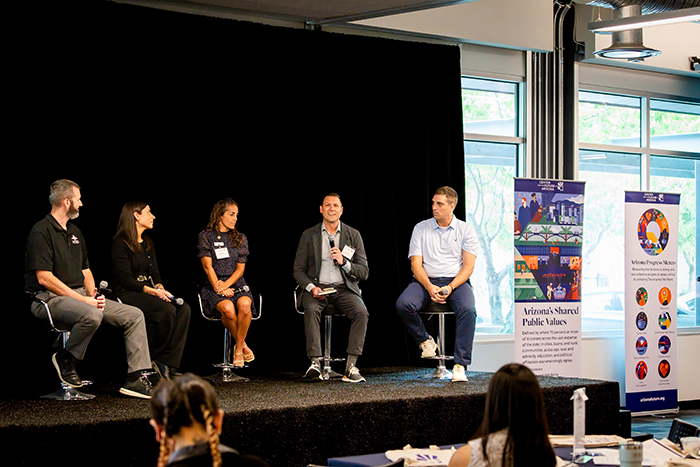
It is about developing young people today who know how to listen, collaborate across differences, exercise judgment, solve problems, and take responsibility for the places they call home—the capabilities Arizona will depend on from its future leaders.
“When young people are invited to participate, they rise to responsibility. When institutions listen, relationships change. And when people have meaningful opportunities to work together on real problems, communities become stronger,” Dr. Francis added. “By giving young people opportunities to learn democracy by doing, we are not only preparing them for the future. We are building the civic health Arizona needs today and developing the leaders who will care for this state tomorrow.”
Be Part of What Comes Next
CFA and ASU are continuing to work with schools, districts, educators, community organizations, and supporters to expand access to high-quality, experiential civic learning across Arizona.
This work would not be possible without the financial support from those who share our commitment, including longtime supporters SRP and Wells Fargo. We are especially grateful for critical investments from the Diane & Bruce Halle Foundation, the Arizona Developmental Disabilities Planning Council, the Steele Foundation, the Arizona Department of Education, the Burton Family Foundation, Helios Education Foundation, and the U.S. Department of Education. Their support, along with many others, has fueled SPB’s expansion and innovative practices over the past decade, helping shape SPB into the impactful civic learning program it is today.
As SPB enters its next decade, CFA is grateful for the partners investing in its future, including the Kemper and Ethel Marley Foundation and the U.S. Department of Education, which recently awarded CFA a three-year, $2 million American History and Civics-National Activities grant.
Schools and districts interested in bringing School Participatory Budgeting to their students, and partners and funders interested in helping expand and sustain this work, are invited to be part of what comes next.
Learn more about School Participatory Budgeting and how to get involved.